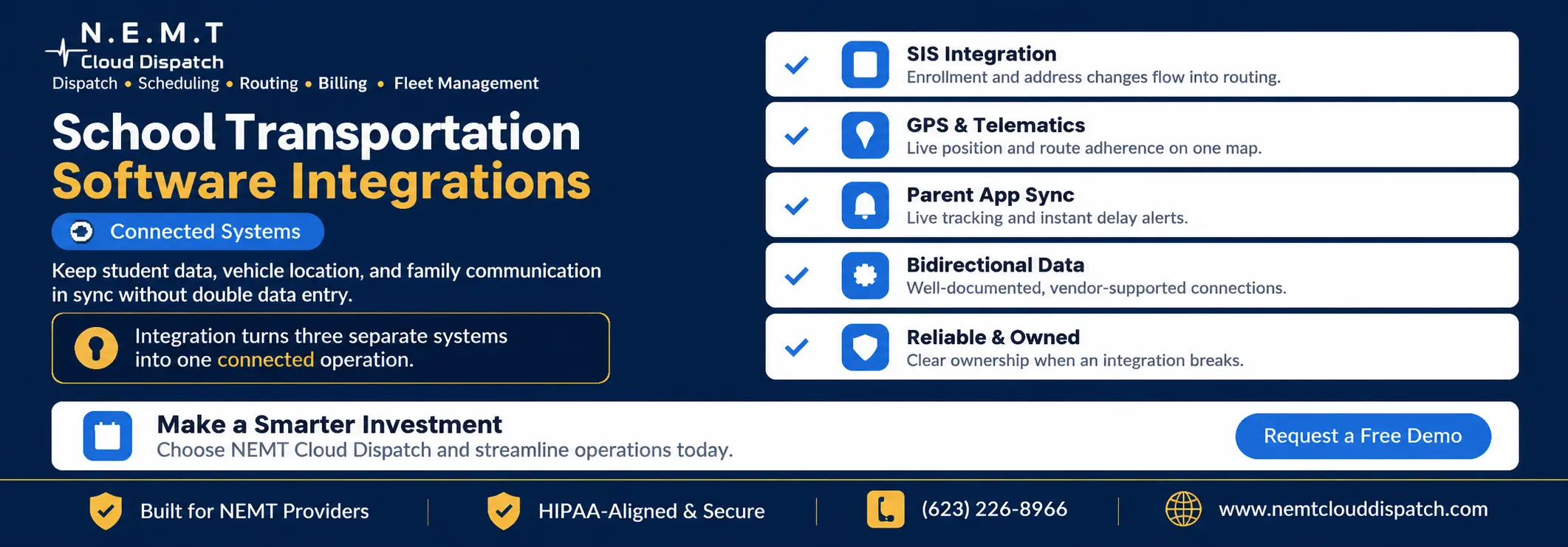
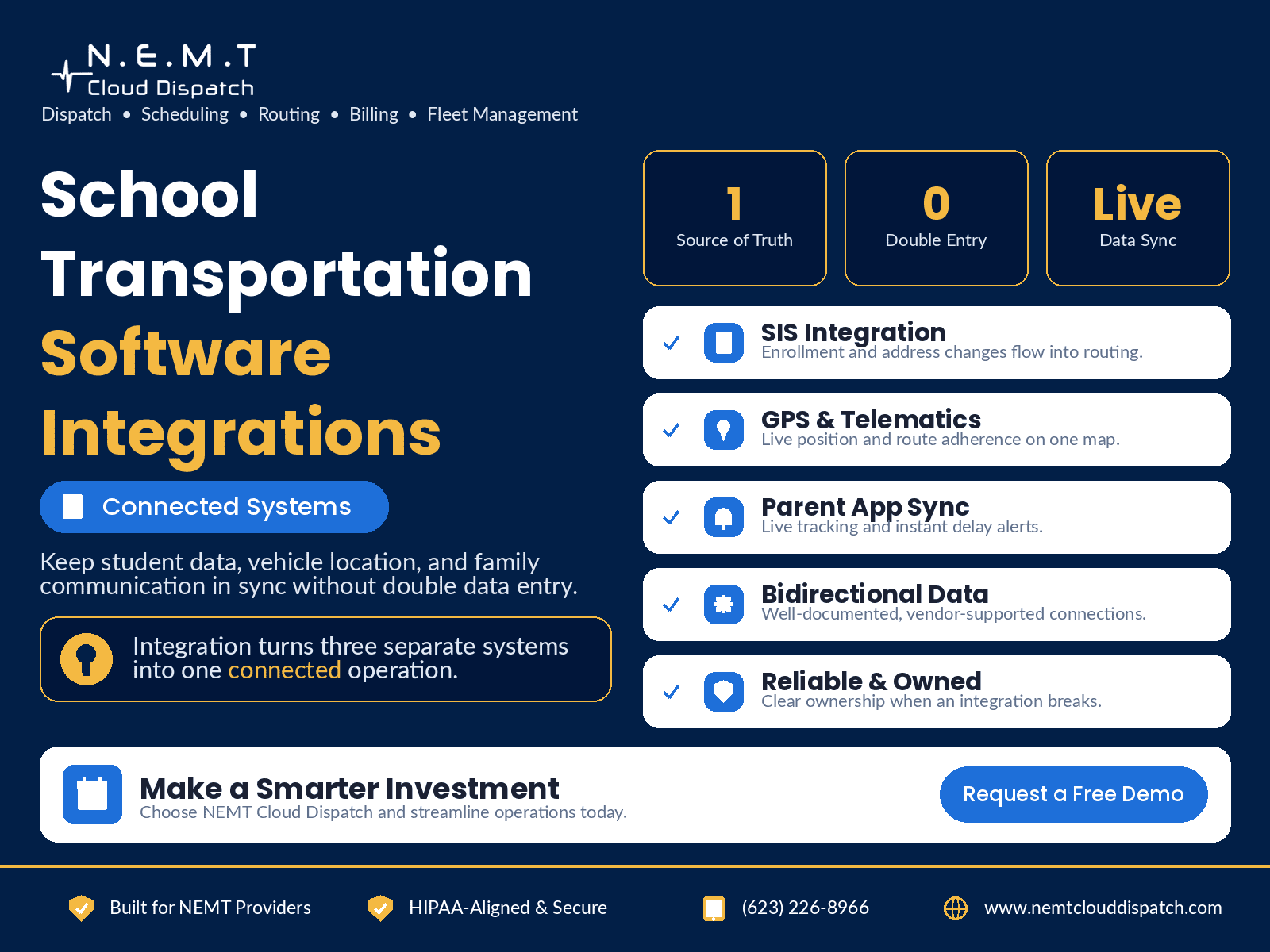
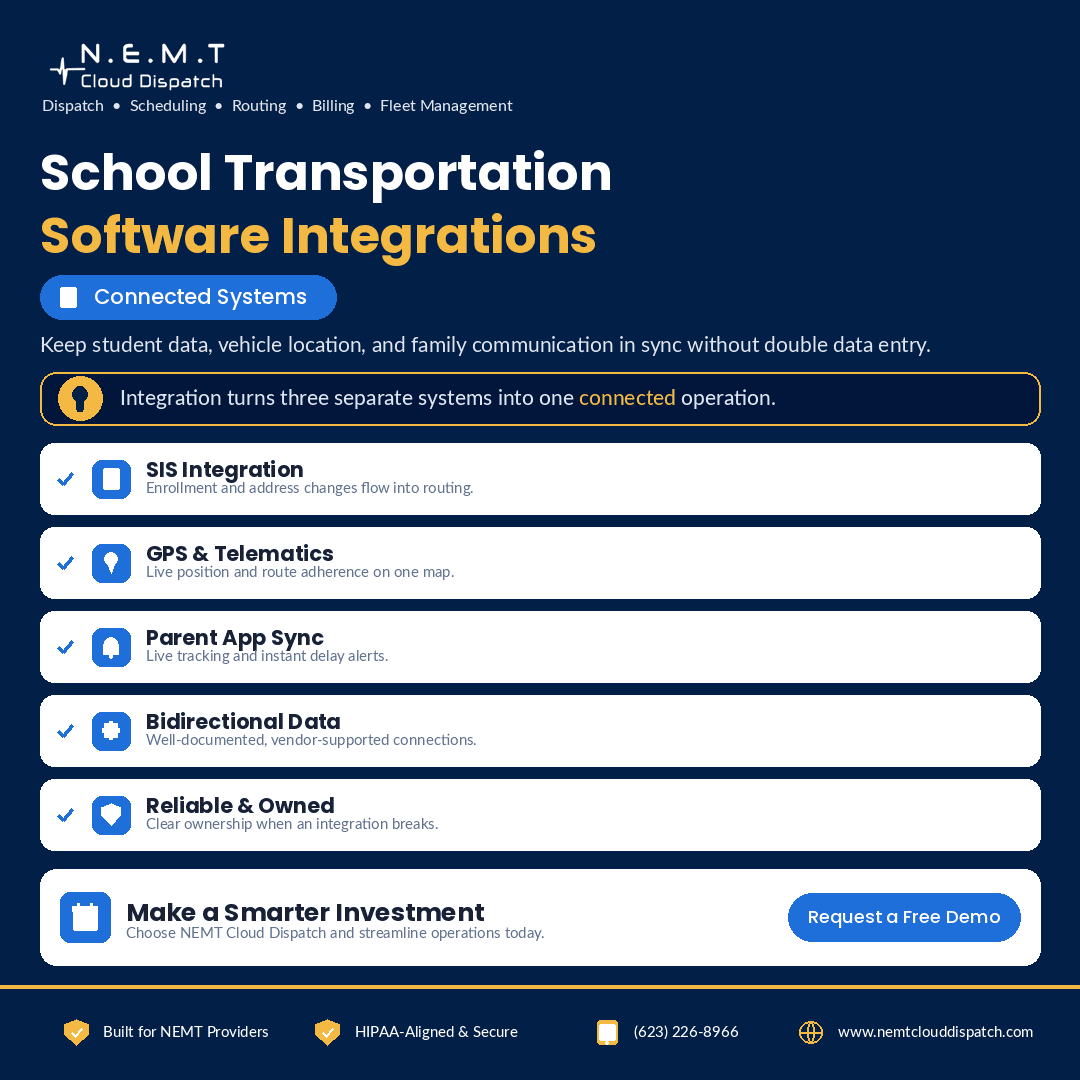
School transportation software is most powerful when it does not stand alone. The platform that plans your routes needs accurate student data from your information system, live location from GPS hardware, and a channel to reach families. Integrations are what keep all of that in sync without double data entry.
This guide covers the three integration categories that matter most for districts, what good integration looks like in practice, and the questions to ask a vendor before you assume two systems will talk to each other.
Student information system (SIS) integration
Your SIS is the source of truth for who your students are, where they live, and which school they attend. When transportation software syncs with the SIS, new enrollments, address changes, and withdrawals flow into routing automatically, so dispatchers are never building routes from stale data.
Look for integrations that handle the common SIS platforms and support scheduled or near-real-time syncs. The payoff is enormous: no more manually re-keying student records every time enrollment shifts.
A connected school district transportation portal can also help districts, schools, and transportation teams access the same transportation data, review route details, manage requests, and keep reporting more organized across departments.
GPS and onboard hardware
Real-time tracking depends on reliable location data from each vehicle. Some platforms provide their own GPS hardware; others integrate with telematics devices you already run. Either way, the integration should deliver live position, speed, and route adherence into the same map your dispatchers use.
- Live vehicle position and speed on the dispatch map
- Route adherence and arrival estimates from real data
- GPS history and playback for incident review
- Support for existing telematics or bundled hardware
For daily operations, GPS data becomes most valuable when it feeds directly into dispatching software. Dispatchers need to see where each vehicle is, whether it is running late, whether it is following the assigned route, and which route needs attention first.
GPS data also improves route optimization software because districts can compare planned routes against actual route performance. Over time, this helps reduce wasted miles, improve stop sequencing, and create more realistic arrival estimates.
Vehicle data should also connect with fleet management software so districts can monitor usage, track maintenance needs, reduce downtime, and keep buses available for assigned routes.
Parent apps and communication
The parent-facing app is the integration families actually see. It pulls live bus location and stop data so parents can track the bus and receive automated alerts. Tight integration means a delay flagged by a dispatcher reaches parents in seconds, not after a wave of phone calls.
A reliable parent app for school bus tracking gives families real-time visibility into pickup times, drop-off updates, route delays, and bus location. This reduces inbound calls and gives parents more confidence during the morning and afternoon transportation window.
For broader alerts, an SMS notification system helps districts send delay notices, weather updates, route changes, and emergency communication quickly. This is especially useful when not every parent uses the app consistently.
What good integration looks like
Strong integrations are bidirectional where it matters, well-documented, and supported by the vendor rather than left to your IT team to maintain. Before assuming two systems connect, ask for a reference district running the same SIS and GPS combination you use, and confirm who owns the integration when something breaks.
The best integrations do more than move data from one system to another. They make the daily workflow easier for dispatchers, drivers, administrators, and families. A complete platform should connect routing, dispatch, GPS, parent communication, reporting, and district visibility inside one operational system.
Before choosing a vendor, also compare features against total cost. Review the vendor’s school transportation software pricing so you know whether integrations, GPS hardware, parent app access, SMS alerts, onboarding, and support are included or billed separately.
Frequently Asked Questions
Will it work with our existing SIS?
Most established platforms integrate with the major student information systems. Confirm your specific SIS and version with the vendor, and ask for a reference district using the same setup.
Do we have to replace our GPS hardware?
Not always. Many platforms integrate with existing telematics, while others bundle their own hardware. Clarify which model the vendor uses before you buy.
How real-time is the parent app?
With proper GPS integration, location and alerts update continuously, so families see the bus move and get notified of delays automatically.