Enterprise-scale features and pricing can make school transportation software feel out of reach for a small district, a charter network, or a parochial school running a handful of buses. It is not. The same routing, tracking, and parent-communication benefits apply at small scale, and modern cloud platforms are built to fit small budgets and lean teams.
This guide focuses on what actually matters when you run a small fleet: keeping costs proportional, avoiding feature bloat, and choosing a platform that one or two people can run without a dedicated IT department.
Why small fleets benefit too
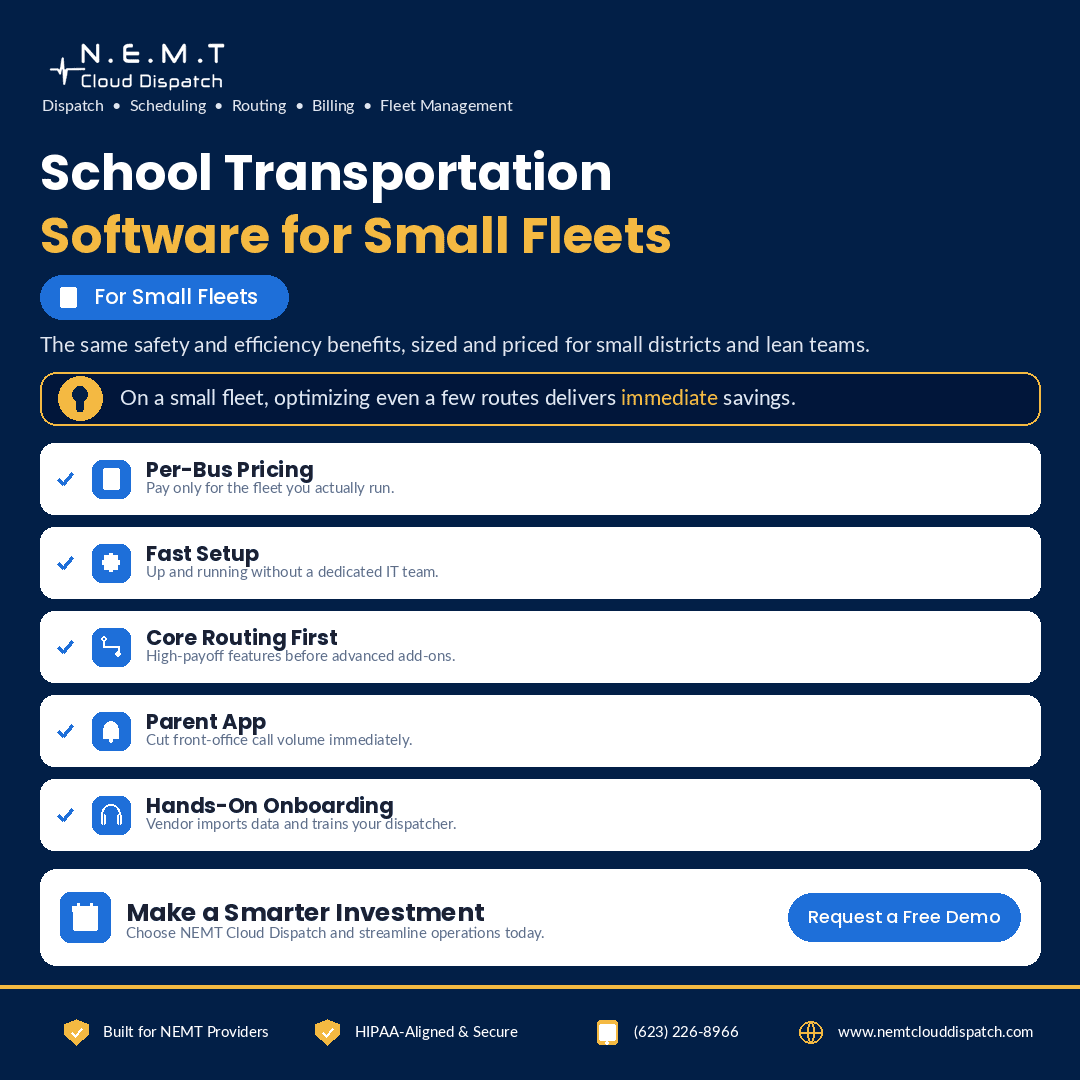
On a small fleet, every bus and every driver counts, so inefficiency is felt acutely. Optimizing even three or four routes saves real fuel and overtime, and a parent app eliminates a surprising share of the front-office phone calls that consume a small team’s day. The safety benefits of ridership tracking do not scale down—they matter just as much for fifty students as for five thousand.
For smaller operations, route optimization software can deliver quick value because even a few improved routes can reduce unnecessary miles, driver hours, and daily schedule pressure. Real-time dispatching software also helps small teams manage route changes, late buses, driver call-outs, and parent questions without relying on paper notes or phone chains.
What to prioritize on a budget
With limited dollars, buy the capabilities with the highest payoff first and add the rest later. For most small operations that means routing, GPS tracking, and a parent app, with ridership scanning close behind.
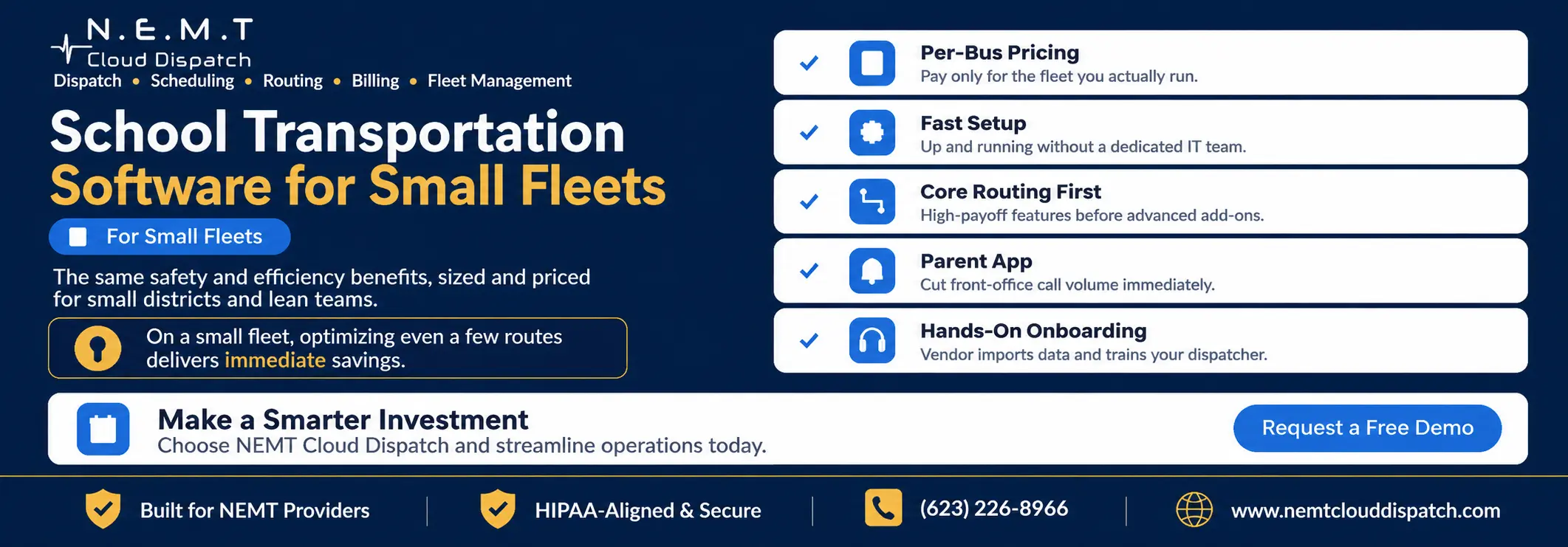
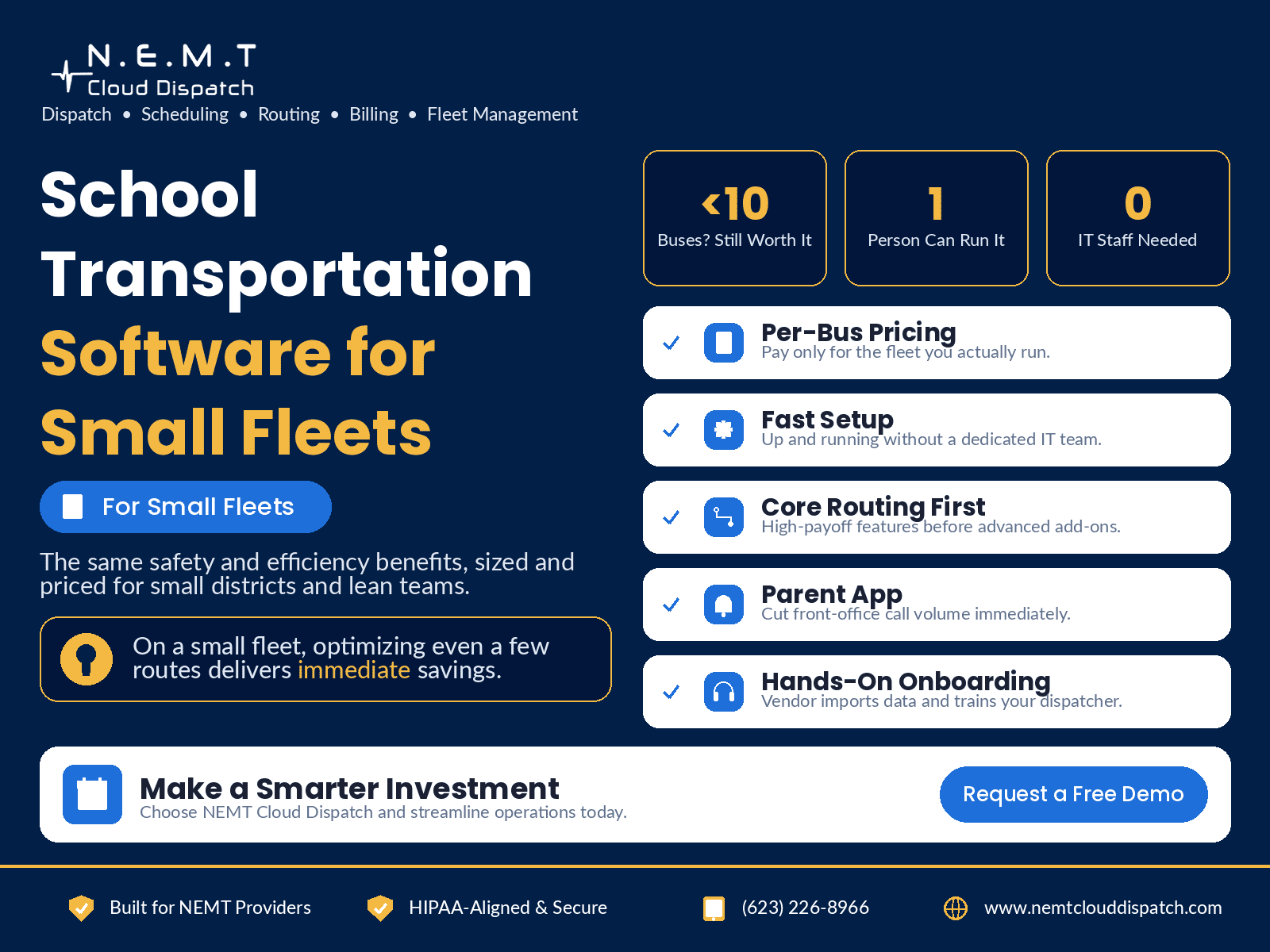
- Per-bus pricing so you only pay for the fleet you run
- Fast, low-effort setup that does not need dedicated IT
- Core routing and GPS before advanced add-ons
- A parent app to cut front-office call volume
- Month-to-month or annual terms without long lock-ins
A reliable parent app for school bus tracking is especially useful for small schools because it reduces repetitive “where is the bus?” calls and gives families real-time visibility without adding more office staff.
Small fleets should also look for simple scheduling software that can handle recurring routes, substitute drivers, special trips, early dismissals, and last-minute changes without creating extra administrative work.
Avoiding feature bloat
The temptation is to buy the biggest suite available, but unused features are wasted budget and added complexity. Choose a platform that lets you start lean and turn on modules as you grow, rather than paying upfront for enterprise capabilities a small team will never touch.
Before committing, compare the vendor’s school transportation software pricing carefully. Look for pricing that matches your actual fleet size, avoids unnecessary add-ons, and gives you room to grow without forcing a long-term enterprise contract too early.
Implementation without an IT team
Small operations rarely have spare technical staff, so onboarding support is critical. Favor vendors who handle data import, configure your routes with you, and train your dispatcher directly. A platform you can run with one trained person is worth more than a powerful one that needs constant maintenance.
Driver adoption also matters. A simple driver app helps drivers view assigned routes, receive updates, follow stop instructions, and stay connected with dispatch without needing paper route sheets or complicated training.
Even for smaller fleets, vehicle readiness is important. Basic fleet management software can help track vehicles, maintenance needs, usage, and availability so a single bus issue does not disrupt the entire daily operation.
Frequently Asked Questions
Is this software overkill for under 10 buses?
No. Per-bus pricing keeps it affordable, and the routing and call-reduction benefits are immediate even on a few vehicles.
Can one person run it?
Yes. Cloud platforms with good onboarding are designed so a single trained dispatcher can manage routing, tracking, and communication.
Do we need to commit to a long contract?
Not necessarily. Many vendors offer annual or month-to-month terms, which is ideal for smaller operations testing the waters.