Price is usually the first question district leaders ask about school transportation software pricing, and the honest answer is: it depends on how you buy and what you need. The good news is that pricing has become far more transparent and flexible than it was even a few years ago, and most districts find the software pays for itself through fuel, labor, and route savings.
This breakdown walks through the common pricing models, realistic ranges, the fees that vendors do not always advertise, and a simple way to estimate return on investment before you sign anything. If you are still comparing systems, start with a full school transportation software platform that connects routing, dispatch, parent communication, driver workflows, and reporting in one place.
Common pricing models
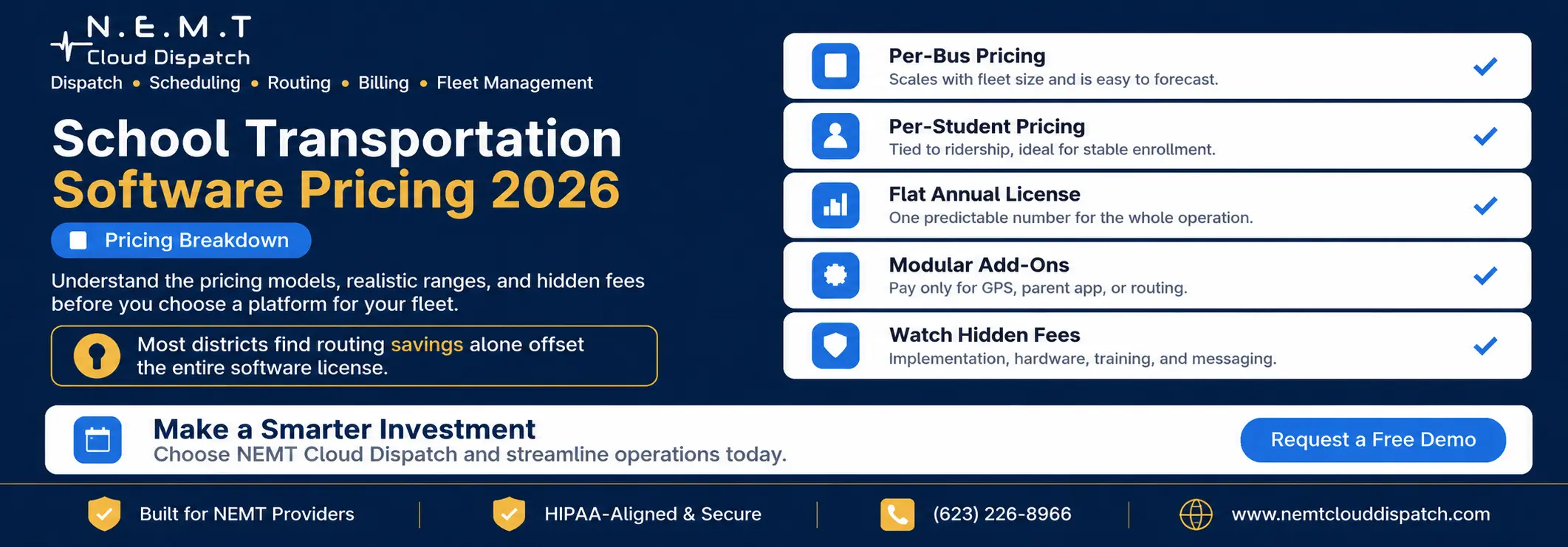
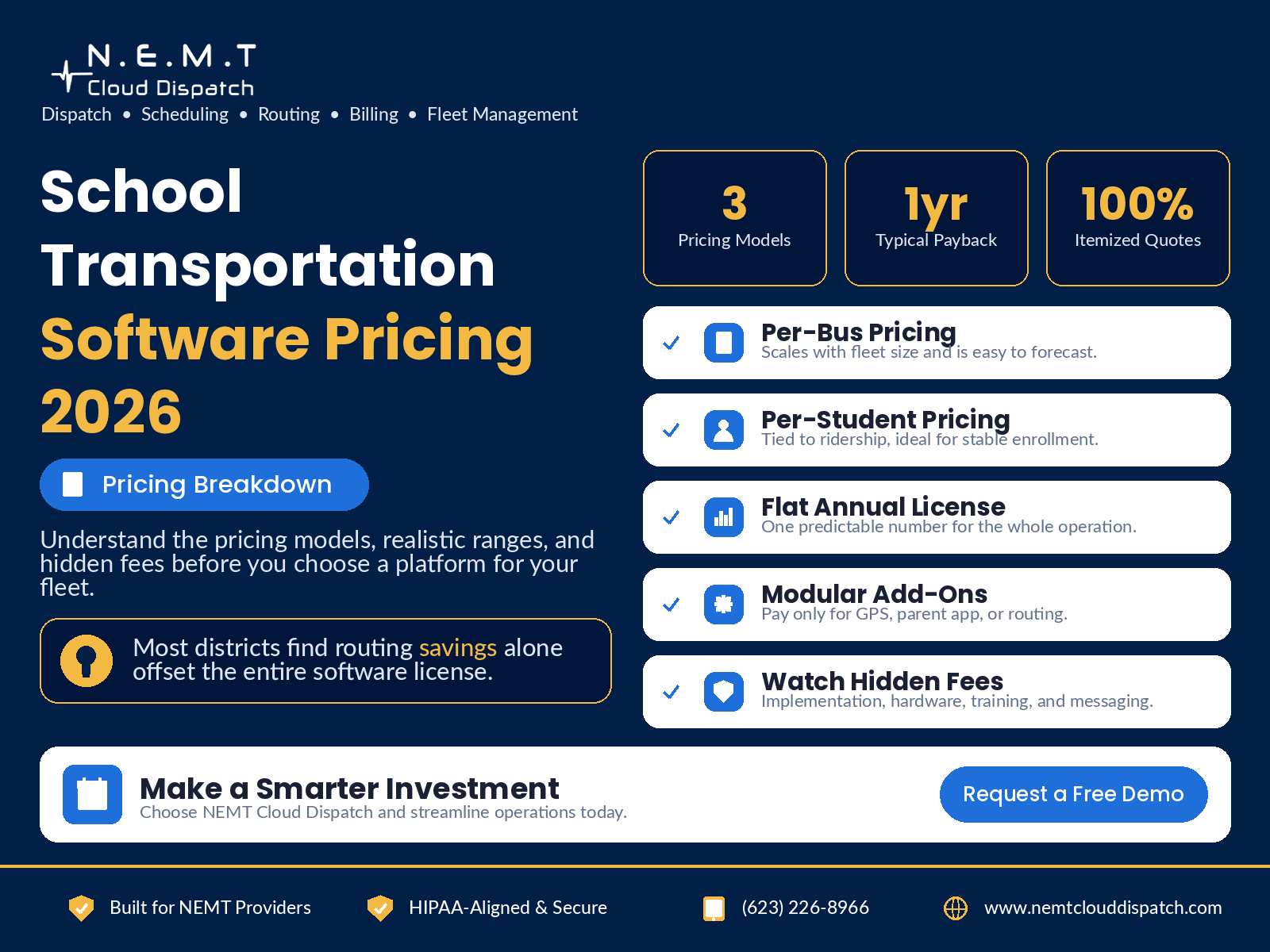
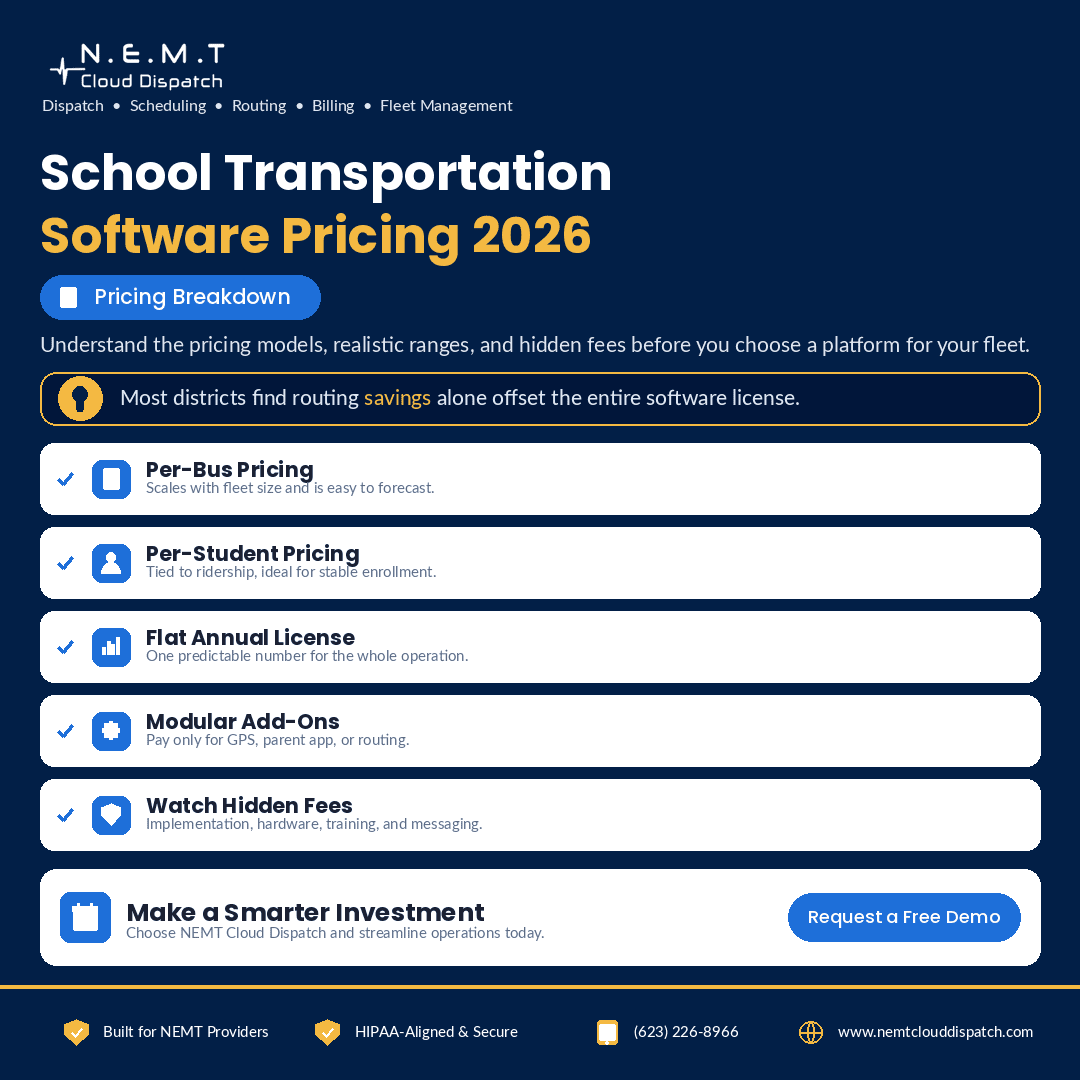
Most platforms use one of three approaches. Per-bus or per-vehicle pricing scales with fleet size and is the most common for districts. Per-student pricing ties cost to enrollment and suits operations with stable ridership. Flat annual licensing bundles everything into one predictable number, which finance teams often prefer for budgeting.
- Per-bus / per-vehicle: scales with fleet size, easy to forecast
- Per-student: tied to ridership, good for stable enrollment
- Flat annual license: one predictable number for the whole operation
- Modular add-ons: pay only for GPS, parent app, or routing as needed
For most districts, the real value is not just the license model but what is included. A platform that includes route optimization software, dispatch tools, fleet visibility, and parent communication can reduce the need for separate systems and lower the total cost of ownership.
Realistic 2026 ranges
Costs vary widely by fleet size, module mix, and region, so treat any single number with caution. As a rough guide, smaller fleets often land in the low hundreds of dollars per bus per year for core routing and tracking, while full-suite deployments with GPS hardware, parent apps, and ridership scanning cost more per vehicle. Always request a written quote scoped to your exact bus count and module list rather than relying on published list prices.
When comparing quotes, make sure each vendor is pricing the same set of capabilities. One quote may include scheduling software, routing, dispatch, parent alerts, reporting, and onboarding, while another may charge separately for each module. This is why the cheapest base price is not always the lowest long-term cost.
Fees vendors don’t always advertise
The sticker price is rarely the full story. Ask directly about one-time and recurring add-ons so there are no surprises at renewal.
- Implementation and data-migration fees (often one-time)
- GPS hardware and cellular data plans per vehicle
- Training and ongoing support tiers
- Per-message or per-notification charges for the parent app
- Annual price escalators built into multi-year contracts
Parent communication is one area where districts should read the fine print. Some vendors charge separately for family communication, app access, or notifications. If parent visibility is important, compare whether the system includes a dedicated parent app for school bus tracking or treats it as an add-on.
Messaging costs can also matter during delays, weather events, and early dismissals. If your district depends heavily on alerts, ask whether the platform includes an SMS notification system or charges per message.
Calculating ROI
The fastest way to justify the spend is to model savings against your current operation. Route optimization that trims even a small percentage of total miles compounds across fuel, driver hours, and vehicle wear. Add the soft savings: fewer parent phone calls, less time redrawing routes by hand, and reduced risk from better ridership tracking.
A practical exercise is to take last year’s fuel and overtime spend, apply a conservative efficiency improvement, and compare it to the annual software cost. Many districts find the routing savings alone cover the license.
ROI should also include operational visibility. With real-time dispatching software, teams can respond faster when a bus is late, a driver calls out, or a route needs to be adjusted. With connected fleet management software, districts can also track vehicle usage, reduce downtime, and plan maintenance before small issues become expensive interruptions.
Questions to ask before you buy
Lock down the total cost of ownership before comparing vendors. Confirm what is included in the base price, what is an add-on, how renewals are priced, and what happens to your data if you leave. A transparent vendor will give you a clear, itemized quote without pressure.
Ask these questions before signing:
- Is pricing based on buses, students, users, routes, or modules?
- Are implementation, training, and data migration included?
- Is GPS hardware included or billed separately?
- Are parent app accounts unlimited?
- Are SMS or push notifications included?
- Does the quote include reporting, routing, dispatch, and fleet tools?
- What renewal increase is written into the contract?
- Can schools and district staff access reports through a school district transportation portal?
- What happens to district, student, route, and vehicle data if you leave?
Frequently Asked Questions
Is school transportation software worth the cost for a small fleet?
Often yes, because per-bus pricing keeps the entry cost low and routing savings scale even on a handful of buses. Smaller operations also save significant administrative time.
Are there hidden costs?
The main extras to watch are implementation, GPS hardware and data, training tiers, and parent-app messaging fees. Ask for an itemized quote to avoid surprises.
How quickly does it pay for itself?
Many districts recover the cost within the first year through reduced fuel, overtime, and routing labor, though results depend on your starting efficiency.