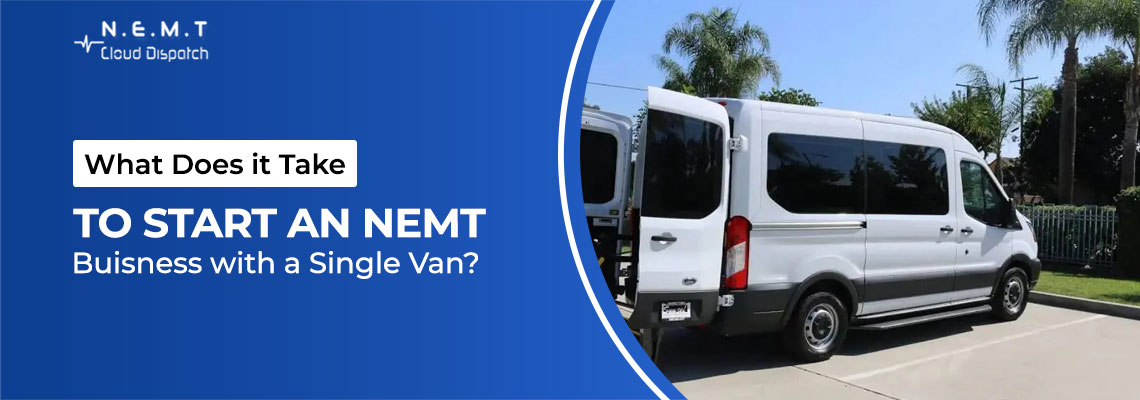
Starting a non emergency medical transportation business does not always require a large fleet or a big budget. In fact, many successful providers begin with only one van. They focus on quality service, compliance, and local demand. As a result, they build trust before expanding.
If you are researching how to start an NEMT business with one van, this guide will help you step by step. It explains planning, licensing, vehicles, technology, and marketing in a clear way. Most importantly, it reflects real-world experience from NEMT Cloud Dispatch.
Why Starting with One Van Makes Sense
A non emergency medical transportation business helps people reach medical appointments safely and on time. These rides are scheduled in advance. Therefore, reliability and organization matter more than speed.
Starting with one van lowers financial risk. In addition, it allows you to understand your service area better. You can test pricing, routes, and demand without pressure.
At the same time, learning how to start an NEMT business with one van requires understanding NEMT startup requirements single vehicle operators must follow. When you do this correctly, growth becomes much easier.
Step 1: Understand Your Local Market
Before you invest money, research your area carefully.
First, identify who needs NEMT services. These may include older adults, dialysis patients, or people with mobility challenges. Next, study existing providers and note service gaps.
As a result, your non emergency medical transportation business will be based on real demand. This research also supports your NEMT business plan for a one van operation.
In addition, local data helps you decide where to focus your marketing efforts.
Step 2: Licensing and Insurance Requirements
Every NEMT provider must follow legal rules. However, these rules vary by state and city.
That is why using a clear NEMT services licensing and insurance guide is essential. Common requirements include:
-
Business registration
-
Medical transport permits
-
Commercial auto insurance
-
General liability insurance
-
Driver background checks
Meeting NEMT startup requirements single vehicle providers face protects your business. Moreover, it builds trust with brokers and healthcare facilities.
Step 3: Choosing the Right Van
Your van is the backbone of your non emergency medical transportation business. Therefore, selecting the right vehicle is critical.
Some operators buy wheelchair-accessible vans. Others convert standard vans. Both options work if they meet regulations.
When learning how to start an NEMT business with one van, always focus on safety and comfort. For example, your van may need:
-
Wheelchair ramps or lifts
-
Securement systems
-
GPS tracking
-
Emergency safety equipment
Include these costs clearly in your NEMT business plan for a one van operation.
Step 4: Build a Practical Business Plan
A business plan gives direction. Without it, mistakes become expensive.
Your NEMT business plan for a one van operation should cover:
-
Startup costs and monthly expenses
-
Pricing strategy
-
Target clients
-
Daily operations
-
Growth goals
In addition, align your plan with NEMT startup requirements single vehicle rules. This ensures your business remains compliant from day one.
A clear plan strengthens your non emergency medical transportation business and increases long-term stability.
Step 5: Use Technology to Stay Organized
Manual scheduling causes errors and delays. Therefore, technology plays a key role. Tools like NEMT Scheduling Software help plan ahead and automate dispatch.
In addition, the NEMT Driver App lets drivers access schedules, routes, and GPS updates on the go, improving consistency and reliability.
Using NEMT Routing Software ensures efficient routing and saves fuel costs.
Step 6: Local Marketing That Works
Marketing does not need to be expensive. However, it must be focused.
Effective local NEMT marketing ideas for single-van business include:
-
Partnering with clinics and hospitals
-
Creating a Google Business Profile
-
Visiting rehabilitation centers
-
Networking with case managers
-
Offering referral incentives
At the same time, always highlight safety, licensing, and reliability. These factors matter most in a non emergency medical transportation business.
Step 7: Launch, Track, and Improve
Once operations begin, tracking performance is essential.
Monitor ride times, fuel costs, and feedback. In addition, review compliance documents often. This keeps you aligned with NEMT startup requirements single vehicle standards.
As demand grows, update your NEMT business plan for a one van operation. Small adjustments can lead to steady growth.
With proper systems, scaling becomes much smoother.
Final Thoughts: Start Smart and Grow Confidently
Starting a non emergency medical transportation business with one van is realistic and achievable. Tools like Key NEMT Cloud Dispatch Features help simplify scheduling, billing, and dispatch.
To understand how software can save you time and money, see Top 10 Benefits of NEMT Cloud Dispatching and Routing Module.
If you are unsure what software features matter most, the Best NEMT Dispatch Software for Medical Transportation Providers article can help.
Request a Demo today and see how NEMT Cloud Dispatch can help you launch and scale with confidence.
Frequently Asked Questions (FAQs)
A non emergency medical transportation business provides scheduled rides for people who need medical care but not emergency services.
Usually, operators launch within 30 to 60 days after completing licensing and vehicle setup.
Yes. A proper NEMT services licensing and insurance guide will outline the required coverage.
Yes. With efficient routing, fair pricing, and consistent marketing, one van can generate steady income.
NEMT Cloud Dispatch is ideal for both new and growing NEMT providers.