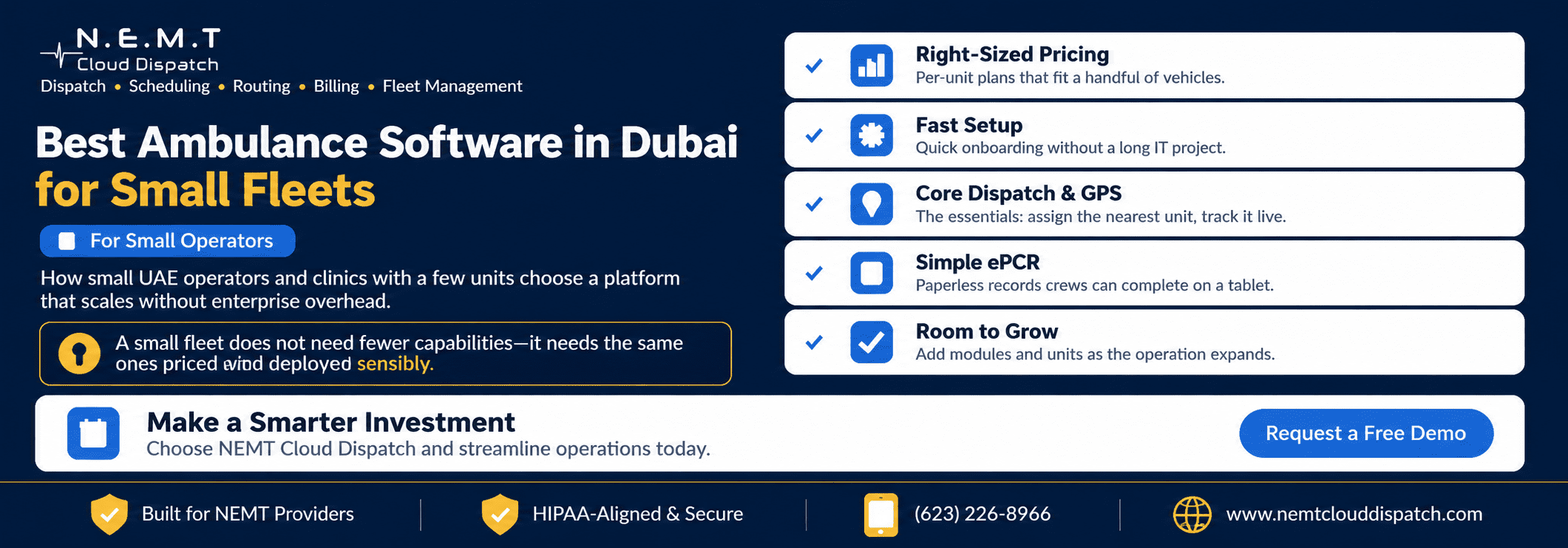
Most coverage of ambulance software assumes a large operation with an IT department and a multi-year budget. That is not the reality for the many UAE clinics, private providers, and small operators running a handful of units. The good news is that a small fleet does not need fewer capabilities — it needs the same ones priced and deployed sensibly. This guide explains what to prioritise when you run between one and ten vehicles.
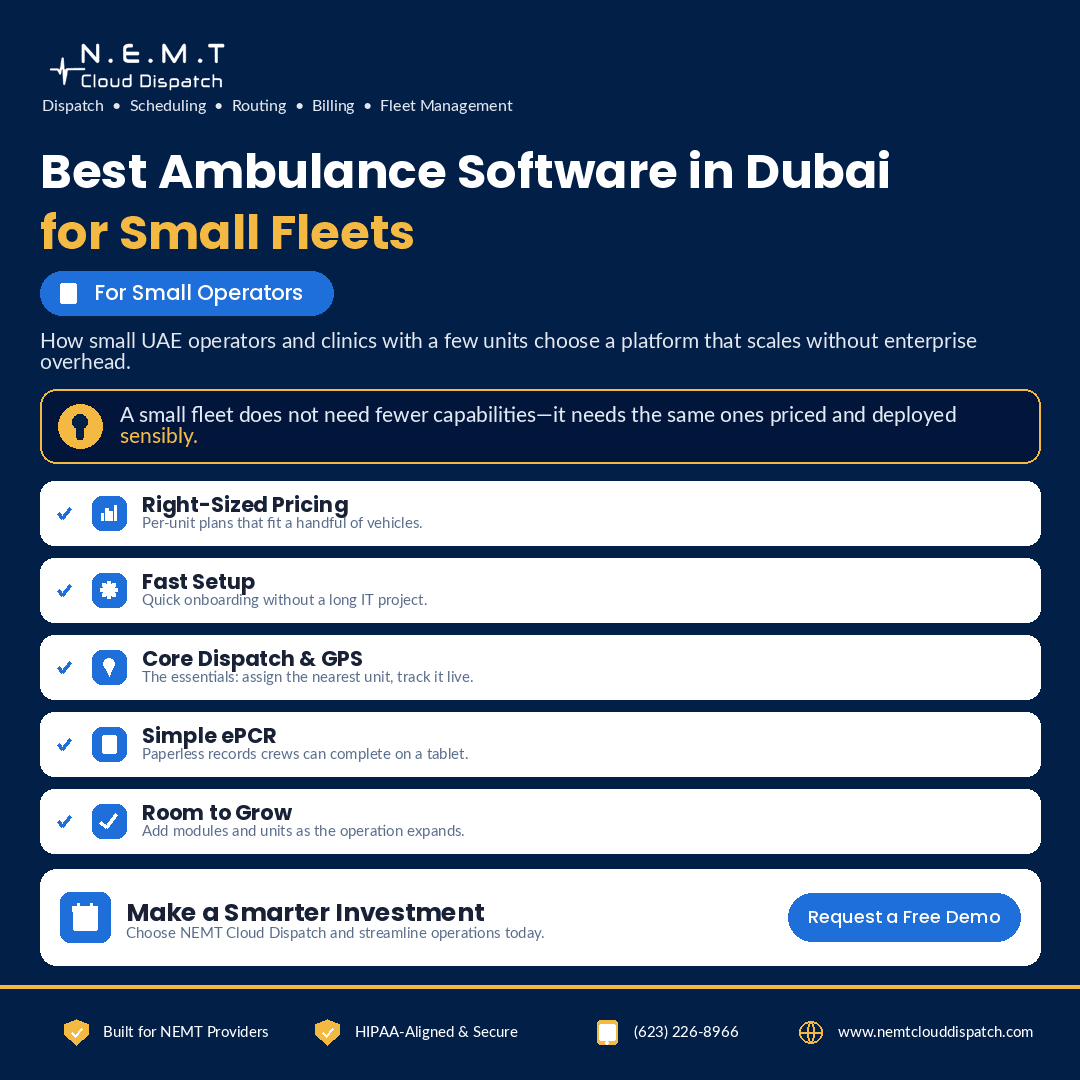
What smWhat small operators actually need
Start with the essentials that deliver value on day one and skip the enterprise bells and whistles until you need them.
• Right-sized pricing: Per-unit plans that fit a few vehicles, with no minimum better suited to a national fleet.
• Fast setup: Onboarding measured in days, not a months-long IT project.
• Core dispatch and GPS: The basics done well: assign the nearest unit and track it live.
• Simple ePCR: Paperless patient records crews can complete on a tablet without training overhead.
• Room to grow: The ability to add modules, integrations, and units as the operation expands.
Avoiding enterprise overhead
The trap for small operators is buying a platform built for a fleet ten times their size — paying for capacity, customisation, and complexity they will never use. The opposite trap is buying something so basic it cannot grow with them, forcing a painful re-platforming in two years. The sweet spot is a platform whose entry tier is genuinely right-sized but whose ceiling is high: you pay for what you use now and unlock more as you scale.
Getting value fast
For a small team, speed to value matters more than feature breadth. Choose a platform you can stand up in days, on the modules that hurt most — usually dispatch and ePCR — and let the team feel the benefit quickly. Clean data still matters: accurate facility addresses and realistic handover times make the system usable immediately. A facility portal can also help clinics, hospitals, and care facilities request or track trips more efficiently. Because a small operation has less inertia than a large one, a well-chosen platform can pay back faster here than anywhere else.
What to ask a vendor as a small operator
Three questions cut through the noise. First, what does the entry tier actually cost for my exact number of vehicles, all in? Second, how long until we are live and capturing records? And third, what does the path look like when we double in size — do prices and capabilities scale smoothly, or do we hit a cliff? Vendors who answer these clearly are the ones who understand small operators.
Quick-Reference Summary
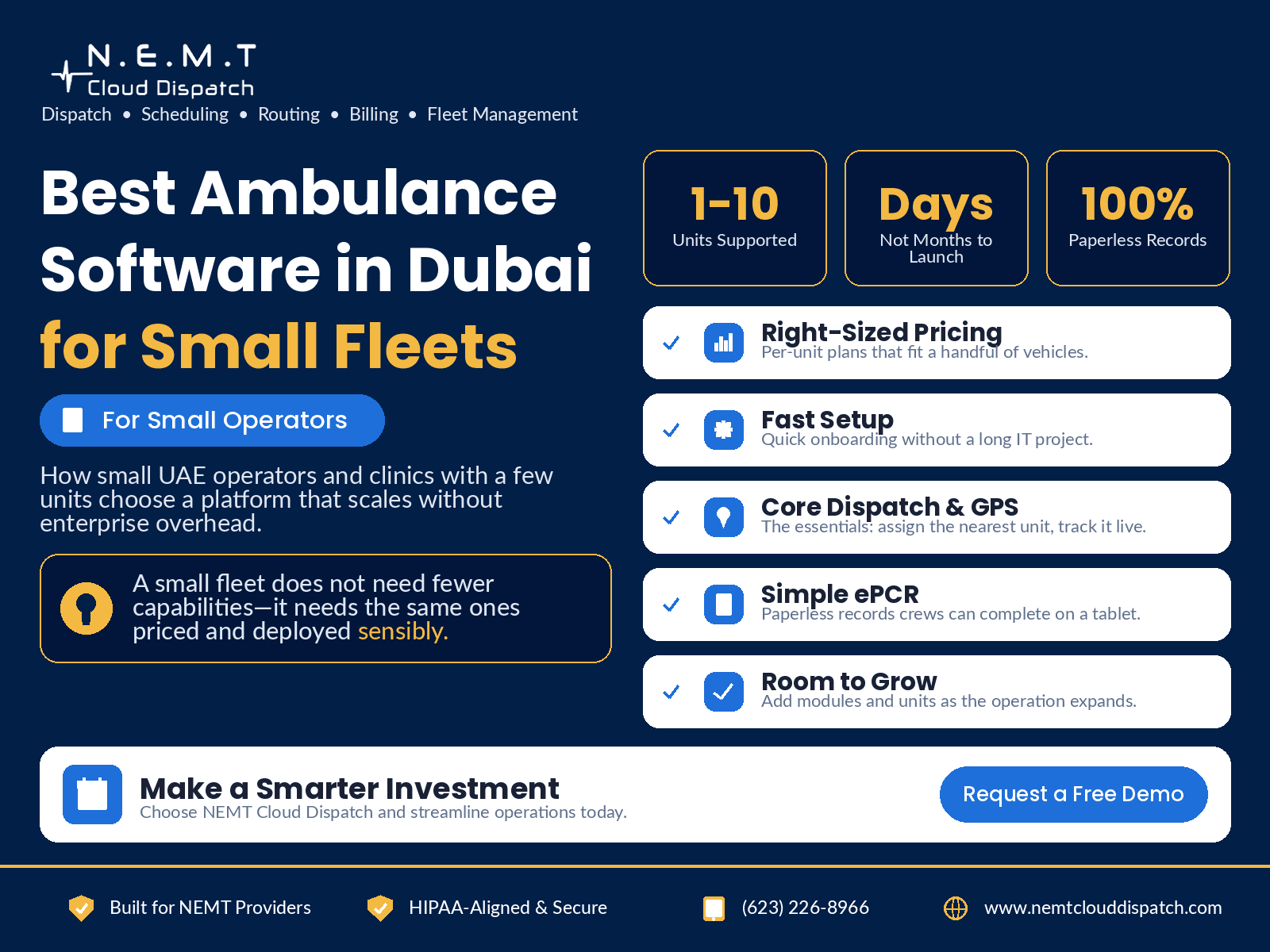
- Define your real scale: Be precise about your number of units and users so quotes reflect your actual size.
- Prioritise dispatch and ePCR: Start with the highest-value modules rather than buying the full enterprise stack.
- Demand right-sized pricing: Confirm an entry tier that fits a small fleet with no oversized minimums.
- Test speed to launch: Favour platforms you can stand up in days, not months.
- Check the growth path: Make sure modules, integrations, and units can be added smoothly as you scale.
Frequently Asked Questions
Is dedicated ambulance software worth it for just a few vehicles?
Yes. Even small operators benefit from faster dispatch, paperless records, and clean billing. A right-sized platform often pays back quickly because a small team has less inertia to overcome.
How quickly can a small operator go live?
With a focused rollout on dispatch and ePCR and clean address data, many small operators are live within days rather than the months a large enterprise deployment can take.
Will I outgrow an entry-tier platform?
Not if you choose well. Look for a platform whose entry tier is right-sized but whose ceiling is high, so you can add fleet management, invoicing and billing, route optimization, integrations, and units without re-platforming.
What should a small operator avoid?
Avoid platforms built for national fleets that charge for unused capacity and complexity, and equally avoid tools so basic they cannot grow with you.