
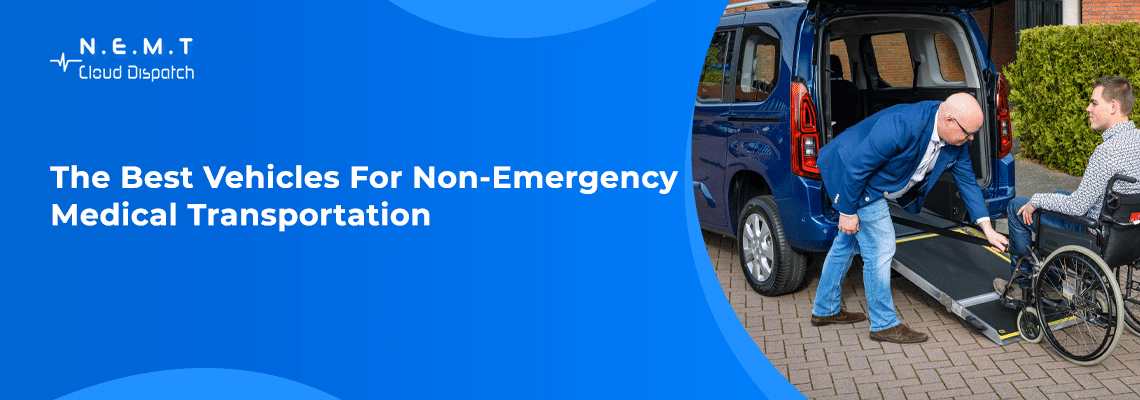
Non-emergency medical transportation (NEMT) is an essential service that ensures patients reach medical appointments safely, comfortably, and on time. Selecting the best vehicles for NEMT is critical for operators to maintain efficiency, safety, and accessibility while managing operational costs. Vehicle choice directly impacts patient comfort, boarding ease, fuel efficiency, and the ability to transport ambulatory, wheelchair, or stretcher-bound passengers.
At NEMT Cloud Dispatch, we provide advanced software solutions for non-emergency medical transportation. Our platform streamlines dispatching, routing, fleet management software, billing, and broker support, helping operators maximize efficiency while delivering superior patient service. Leveraging our expertise, this guide explores the best vehicles for NEMT, highlights accessibility features, examines specialized vehicle types, and offers model-level recommendations for different patient needs.
Why Vehicle Choice Matters in NEMT
The NEMT industry is unique because vehicles must accommodate diverse patient needs safely and efficiently. Selecting the best vehicles for NEMT requires understanding:
- Patient profiles: ambulatory, wheelchair-bound, stretcher, or bariatric passengers.
- Route types: urban, suburban, or long-distance trips.
- Total cost of ownership (TCO): including acquisition, conversion, fuel, maintenance, and insurance.
- Accessibility compliance: ensuring ADA standards and securement systems are met.
The right vehicle not only ensures patient safety and comfort but also improves fleet utilization and reduces operational downtime. NEMT Cloud Dispatch supports operators by optimizing routes, vehicle assignments, and scheduling to ensure the most efficient use of resources.
Main Types of NEMT Vehicles
Operators typically choose from several classes of vehicles based on patient needs and route demands. These include:
1. Minivans
Minivans are ideal for ambulatory passengers and single-wheelchair transport. They offer compact dimensions, low fuel consumption, and compatibility with non-emergency medical transportation vans conversion kits. Popular models include the Toyota Sienna and Chrysler Pacifica.
Advantages:
- Easy urban maneuverability
- Lower purchase and operating costs
- Compatible with wheelchair ramps or transfer seats
Considerations:
- Limited space for multiple wheelchair passengers
- Moderate conversion cost
2. Full-Size Vans
Full-size vans like the Ford Transit, Mercedes-Benz Sprinter, and Ram ProMaster provide larger interior volumes, multiple seating options, and high payload capacity. They support both nemt van conversions and specialized features for stretcher and multi-passenger wheelchair transport.
Advantages:
- Flexible interior layouts for ramps, lifts, and modular seating
- Durable chassis for long-distance routes
- Easier conversion for multi-passenger and stretcher needs
Considerations:
- Higher fuel and maintenance costs
- Larger footprint may limit urban maneuverability
3. Wheelchair Accessible Vans (WAVs)
Wheelchair accessible vans are specifically designed for patients using mobility devices. These best vehicles for wheelchair transport provide integrated lifts, securement systems, and ADA-compliant access.
Key Benefits:
- Reduced boarding and alighting time
- Improved patient safety and dignity
- Lower caregiver injury risk
Essential Features:
- Certified lift or ramp systems
- Securement anchors or docking systems
- Adequate floor space for caregivers and wheelchair maneuverability
NEMT Cloud Dispatch integrates WAVs into route planning to ensure optimal assignment and reduce trip delays, enhancing overall operational efficiency.
4. Ambulettes
Ambulettes are optimized for transporting multiple wheelchair passengers simultaneously. They are ideal for group appointments or shuttle services, making them a specialized non emergency medical transportation vehicle for high-volume routes.
Features:
- Multiple wheelchair securement points
- Rear or side entry optimized for throughput
- Seating for ambulatory passengers
Considerations:
- Higher acquisition and conversion cost
- Requires trained drivers and aides
5. Stretcher Vans
Stretcher vans serve non-ambulatory, bed-bound patients who require gurney mounts and attendant access. These best vehicles for handicapped passenger transport include floor-mounted gurney rails, lifts, and additional interior space for medical equipment.
Advantages:
- Safe supine transport
- Attendant seating with restraints
- Specialized ramps or lifts
Considerations:
- Expensive conversions
- Requires staff training for safe handling
You Can Also Read:How to Choose the Best NEMT Vehicles for Your Business
Essential Accessibility Features
For all NEMT vehicles, accessibility is crucial. The best vehicles for wheelchair transport incorporate:
- Ramps or lifts: in-floor, fold-out, or platform lifts rated for safe weight capacity
- Securement systems: strap-based or docking-style systems certified for ADA compliance
- Floor space: enough room for maneuvering wheelchairs and caregiver access
- Interior safety: non-slip flooring, grab handles, and adequate lighting
Proper accessibility features reduce manual handling risks, improve boarding efficiency, and enhance patient dignity. NEMT Cloud Dispatch ensures that vehicles with these features are deployed appropriately across routes.
Role of Electric and Hybrid NEMT Vehicles
Electric and hybrid vehicles are transforming non-emergency medical transportation vans operations. Hybrids like the Toyota Sienna Hybrid improve fuel efficiency for stop-and-go urban routes, while fully electric vans like the Ford E-Transit or Ram ProMaster EV reduce long-term operating costs and emissions.
Advantages of EVs and Hybrids:
- Lower per-mile energy cost
- Simplified maintenance compared to combustion engines
- Reduced environmental impact
- Eligibility for incentives and grants
Operators must consider route length, daily mileage, payload, and charging infrastructure. NEMT Cloud Dispatch integrates EVs into route planning to maximize efficiency and ensure timely patient transport.
How to Choose the Best Vehicles for NEMT
Selecting the ideal fleet requires balancing cost, patient needs, and operational efficiency.
Step 1: Define Your Mission Profile
- Route type: urban, suburban, or long-distance
- Average passenger count
- Patient type: ambulatory, wheelchair, stretcher, or bariatric
Step 2: Estimate Conversion Needs
- Wheelchair lifts or ramps
- Securement systems
Gurney mounts and interior layout adjustments
Step 3: Calculate Total Cost of Ownership (TCO)
- Vehicle acquisition
- Conversion cost
- Fuel or energy consumption
- Maintenance and repair
- Insurance and licensing
- Resale value
Step 4: Ensure ADA and Safety Compliance
- Verify securement systems, floor space, and interior accessibility
- Maintain documented inspection logs and staff training
Step 5: Pilot Test Vehicles
- Test on representative routes before scaling fleet purchases
Advantages of Partnering with NEMT Cloud Dispatch
Operating an efficient NEMT fleet requires more than the right vehicle—it demands smart routing, real-time dispatching, and reliable billing systems. NEMT Cloud Dispatch helps operators:
- Optimize routes for any fleet size
- Track vehicle utilization and efficiency
- Manage wheelchair, stretcher, and ambulatory passengers seamlessly
- Simplify billing and broker coordination
- Maintain ADA compliance and staff training records
By combining the best vehicles for NEMT with advanced dispatch software, operators reduce costs, improve patient experience, and scale services effectively.
Conclusion
Selecting the best vehicles for NEMT is critical to delivering safe, comfortable, and efficient patient transport. Minivans offer urban efficiency, full-size vans provide flexibility for multi-passenger and stretcher transport, WAVs enhance wheelchair accessibility, and specialized vehicles like ambulettes and stretcher vans meet niche needs. Electric and hybrid platforms further reduce operating costs and environmental impact.
NEMT Cloud Dispatch ensures your fleet operates at peak efficiency, from intelligent vehicle deployment to real-time dispatching and streamlined billing. Equip your fleet with the right vehicles and software to elevate patient care and operational performance. Request a demo today to see how NEMT Cloud Dispatch can transform your NEMT operations.