
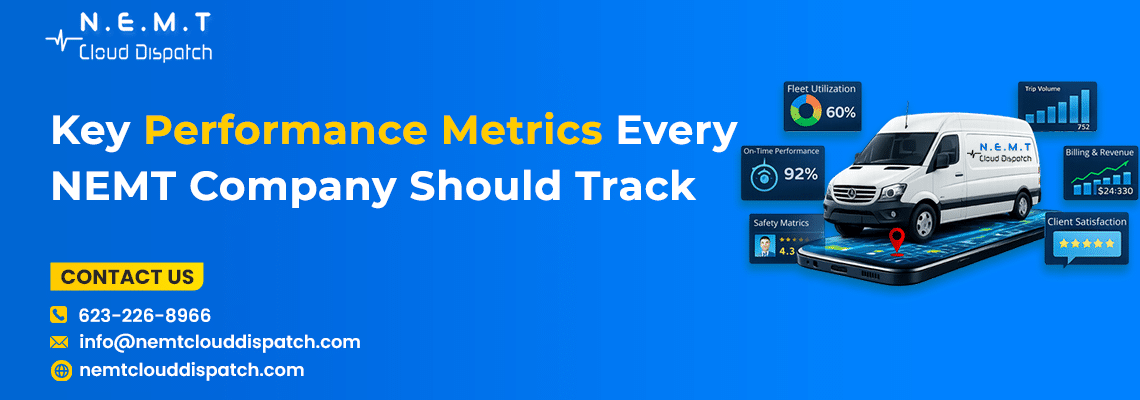
The Non-Emergency Medical Transportation (NEMT) industry is growing rapidly. Every day, thousands of patients depend on transportation services to reach medical appointments safely and on time. Tracking NEMT performance metrics allows providers to monitor trip efficiency, fleet utilization, and driver productivity, ensuring reliable and efficient service. For authoritative reference on transportation safety and scheduling, see CDC Transportation Safety Guidelines.
Many NEMT companies face common challenges. For example, they struggle to track trip efficiency, reduce operational costs, and ensure vehicles arrive on time. As a result, without proper data tracking, companies may lose revenue opportunities and experience operational inefficiencies.
This is where NEMT performance metrics become essential.
By tracking the right performance indicators, transportation providers can gain valuable insights into their operations. In addition, these insights help businesses improve efficiency, enhance patient satisfaction, and increase overall profitability.
Modern platforms such as NEMT Cloud Dispatch make it easier to monitor operational data in real time. Consequently, companies can track trips, drivers, and fleet activity while making smarter business decisions.
In this article, we will explore the most important metrics every NEMT company should track. Moreover, we will explain how the right technology can help transportation providers operate more efficiently and grow their business.
Why NEMT Performance Metrics Matter in the Industry
Running a successful transportation company requires more than simply assigning drivers to trips. Instead, companies must constantly monitor operational efficiency and service quality.
First of all, tracking NEMT performance metrics allows businesses to understand how their operations are performing on a daily basis. For instance, companies can analyze trip completion rates, driver productivity, and route efficiency.
Moreover, data-driven insights help organizations identify operational bottlenecks. As a result, managers can take proactive steps to improve scheduling, reduce delays, and increase fleet utilization.
In addition, monitoring NEMT KPIs allows companies to build stronger relationships with healthcare providers and brokers. When transportation services consistently meet performance expectations, trust and reliability naturally increase.
Therefore, modern NEMT companies rely on technology platforms such as NEMT Cloud Dispatch to track performance indicators and streamline operations.
Top NEMT Performance Metrics Every Company Should Track
Below are the essential NEMT performance metrics that transportation providers should monitor regularly.
1. On-Time Pickup and Drop-Off NEMT Performance Metrics
Punctuality is one of the most important indicators of service quality. After all, patients depend on reliable transportation to attend medical appointments.
If vehicles arrive late, patients may miss important treatments. Because of this, companies must closely track on-time performance.
Key indicators include:
- Percentage of on-time pickups
- Average delay time
- Number of late trips
Tracking these operational metrics helps dispatchers identify scheduling issues. Furthermore, tools in solutions like fleet management software automate real-time performance monitoring.
2. Trip Completion Rate
The trip completion rate measures the percentage of scheduled trips that are successfully completed. For instance, a high completion rate indicates reliable operations, while missed or cancelled trips highlight inefficiencies. In addition, cancelled trips can damage relationships with brokers and reduce revenue.
Moreover, tracking this metric allows managers to identify patterns, such as routes with frequent delays or drivers with high cancellation rates. As a result, companies can take proactive steps to reduce cancellations and improve service quality.
Furthermore, modern tools like NEMT Cloud Dispatch automatically monitor trips in real time. Because of this, operators can quickly detect issues and ensure that scheduled trips are completed efficiently.
3. Fleet Utilization NEMT Performance Metrics
Fleet utilization measures how effectively vehicles are being used within a transportation operation. In other words, it shows whether vehicles are actively completing trips or remaining idle for long periods.
When fleet utilization is low, companies may experience unnecessary operational costs. However, when utilization is optimized, businesses can significantly improve efficiency and profitability.
For example, by analyzing NEMT fleet performance, operators can identify vehicles that are underutilized. Consequently, dispatchers can adjust schedules and assign more trips to maximize productivity.
Furthermore, modern routing technology helps reduce empty miles and improve trip density. Because of this, transportation providers can complete more trips while reducing fuel consumption. The U.S. Department of Energy offers insights into the benefits of optimizing fleet efficiency and reducing fuel consumption.
Solutions like NEMT Cloud Dispatch provide intelligent scheduling and real-time vehicle tracking. As a result, companies can monitor their fleet activity and improve overall efficiency.
4. Driver Productivity
Drivers play a critical role in transportation services. Therefore, companies must measure how efficiently drivers complete their trips.
Important indicators include:
- Trips completed per driver
- Average trip duration
- Driver punctuality rate
- Passenger feedback
By analyzing these medical transportation KPIs, companies can better understand driver performance.
In addition, managers can provide training or support when necessary. As a result, overall service quality improves.
Modern systems such as NEMT Cloud Dispatch make it easy to monitor driver activity. For instance, managers can review trip history, route performance, and driver ratings in one dashboard.
5. Cost Per Trip
Understanding the cost per trip is essential for maintaining profitability. For example, including expenses such as fuel, driver wages, maintenance, and insurance gives a complete view of trip costs. In addition, analyzing cost per trip helps operators identify inefficiencies that may be eating into profits.
Similarly, comparing costs across different routes or drivers reveals opportunities for improvement. As a result, transportation providers can adjust scheduling, optimize routes, and reduce unnecessary expenses.
Moreover, solutions like NEMT Cloud Dispatch provide automated reporting of trip costs. Therefore, companies can monitor expenses continuously and make informed decisions to improve financial performance.
6. Revenue Per Trip
Tracking revenue per trip helps companies measure the financial health of their operations. For instance, knowing which trips generate the highest revenue allows managers to focus on profitable routes. In addition, it helps compare broker reimbursement rates and optimize scheduling for maximum return.
Furthermore, consistent monitoring of revenue per trip ensures that no trips are billed incorrectly. As a result, companies can maintain accurate financial records and strengthen broker relationships.
Moreover, advanced tools like NEMT Cloud Dispatch automate invoicing and provide real-time revenue analytics. Because of this, operators can easily identify trends and take action to maximize profitability.
7. Vehicle Downtime and Maintenance
Vehicle reliability is critical in NEMT operations, which makes tracking vehicle downtime and maintenance essential. For example, vehicles that frequently break down or are out of service disrupt schedules and reduce trip completion rates. In addition, unplanned maintenance increases operational costs.
Similarly, monitoring maintenance schedules helps companies prevent unexpected breakdowns. As a result, operators can ensure vehicles are safe, reliable, and ready for daily trips.
Moreover, platforms like NEMT Cloud Dispatch provide alerts for upcoming maintenance and track downtime efficiently. Because of this, companies can plan proactively, reduce service interruptions, and maintain high-quality transportation services.
8. Patient Satisfaction and Service Quality
Patient experience is a major factor in long-term business success.
Satisfied passengers lead to stronger broker relationships and positive referrals.
Metrics to track include:
- Passenger ratings
- Complaint frequency
- Trip experience feedback
These medical transportation KPIs provide insight into service quality and help identify improvement areas.
Companies that focus on patient satisfaction often outperform competitors in the NEMT market.
9. Route Efficiency and Mileage Optimization
Fuel costs represent a major expense for transportation providers.
Route optimization helps reduce unnecessary mileage and improve efficiency.
Key indicators include:
- Average miles per trip
- Deadhead mileage
- Fuel consumption per route
Tracking these NEMT operational metrics helps companies reduce fuel expenses and increase overall profitability.
With intelligent routing algorithms, NEMT Cloud Dispatch enables operators to optimize trip assignments and minimize wasted travel time.
10. Broker Compliance and Reporting Accuracy
NEMT companies must meet strict broker reporting standards.
Failure to maintain compliance can result in penalties or contract loss.
Key compliance indicators include:
- Accurate trip documentation
- Billing accuracy
- Authorization matching
These NEMT performance metrics ensure operational transparency and help companies maintain strong broker partnerships.
How Technology Improves NEMT Performance Tracking
Manual tracking methods are no longer sufficient for modern transportation operations.
Today’s successful providers rely on specialized software platforms to monitor NEMT KPIs and streamline workflows.
NEMT Cloud Dispatch offers a complete solution designed specifically for medical transportation providers.
Key capabilities include:
- Intelligent dispatching and scheduling
- Real-time GPS tracking
- Automated billing and broker integration
- Driver performance analytics
- Fleet monitoring and maintenance alerts
- Comprehensive reporting dashboards
By centralizing operational data, the platform allows companies to monitor NEMT business metrics, improve efficiency, and scale operations with confidence.
Best Practices for Monitoring NEMT Metrics
Tracking data is only valuable if it leads to meaningful improvements.
Here are best practices for managing performance data effectively:
Establish Clear Performance Goals
Define realistic benchmarks for service quality, cost efficiency, and driver productivity.
Use Real-Time Data
Real-time dashboards provide instant insights into NEMT fleet performance and operational status.
Analyze Trends Regularly
Monthly and quarterly reviews help identify patterns in medical transportation KPIs and guide strategic decisions. The Federal Motor Carrier Safety Administration (FMCSA) provides regulatory guidelines that can help frame your safety and compliance benchmarks.
Automate Reporting
Automated systems reduce errors and ensure accurate tracking of NEMT operational metrics.
Final Thoughts
The success of any transportation company depends on how effectively it measures and improves its operations.
Tracking the right NEMT performance metrics provides valuable insights into service reliability, operational efficiency, and financial health. By focusing on the key indicators discussed in this guide, transportation providers can improve patient satisfaction, strengthen broker relationships, and increase profitability.
However, managing these metrics manually can be time-consuming and prone to errors. That’s why many modern NEMT providers rely on advanced platforms like NEMT Cloud Dispatch.
With powerful dispatching tools, fleet management features, and advanced analytics, NEMT Cloud Dispatch helps operators track critical NEMT performance metrics, optimize operations, and scale their business with confidence.
Request a Demo
If you want to improve your transportation operations and gain full visibility into your NEMT performance metrics, it’s time to upgrade your dispatch system.
NEMT Cloud Dispatch provides the tools you need to manage trips, optimize routes, monitor drivers, and streamline billing all in one powerful platform.
Request a Demo today and discover how NEMT Cloud Dispatch can transform your transportation business and help you deliver more reliable, efficient, and profitable services.
FAQs for NEMT Performance Metrics
NEMT performance metrics are data points that measure operational efficiency. For example, they track on-time pickups, trip completion, and driver productivity. As a result, companies can improve service quality and reduce costs.
Trip completion shows how many scheduled trips are successfully done. Moreover, it highlights operational gaps and inefficiencies. Because of this, companies can optimize scheduling and maintain broker trust.
Fleet utilization measures how effectively vehicles are used. In addition, high utilization reduces idle time and unnecessary costs. Therefore, it improves overall operational efficiency and profitability.
Driver productivity tracks trips completed, punctuality, and efficiency. For instance, analyzing these metrics helps managers identify training needs. As a result, service quality and patient satisfaction increase.
Cost per trip includes fuel, wages, maintenance, and insurance. Similarly, comparing costs across routes reveals inefficiencies. Because of this, companies can reduce expenses and improve margins.
Monitoring vehicle downtime prevents unexpected breakdowns. In addition, it ensures safety and reliability for passengers. Consequently, transportation providers can maintain high-quality service consistently.